

Agamemnon Had 1000 Ships - We Have 400 For A Much Bigger Problem
The laydown (and gaps) for an INDOPACOM fight + structured analysis of the budget, programs, and strategy solving it

Last year, damage to a single oiler - USNS Big Horn - exposed something the Navy prefers to keep implicit: much of the fleet still operates on single points of failure. In combat with Houthis in the Red Sea, the 5th Fleet needed jet fuel, munitions, and many more consumables. The sea lanes the Houthis were contesting suddenly became even more vulnerable, because American naval power relies on a brittle force architecture built for peacetime fuel efficiency, not combat. The Houthis didn’t even have to shoot the oiler for our operations to degrade - our logistics are already contested.
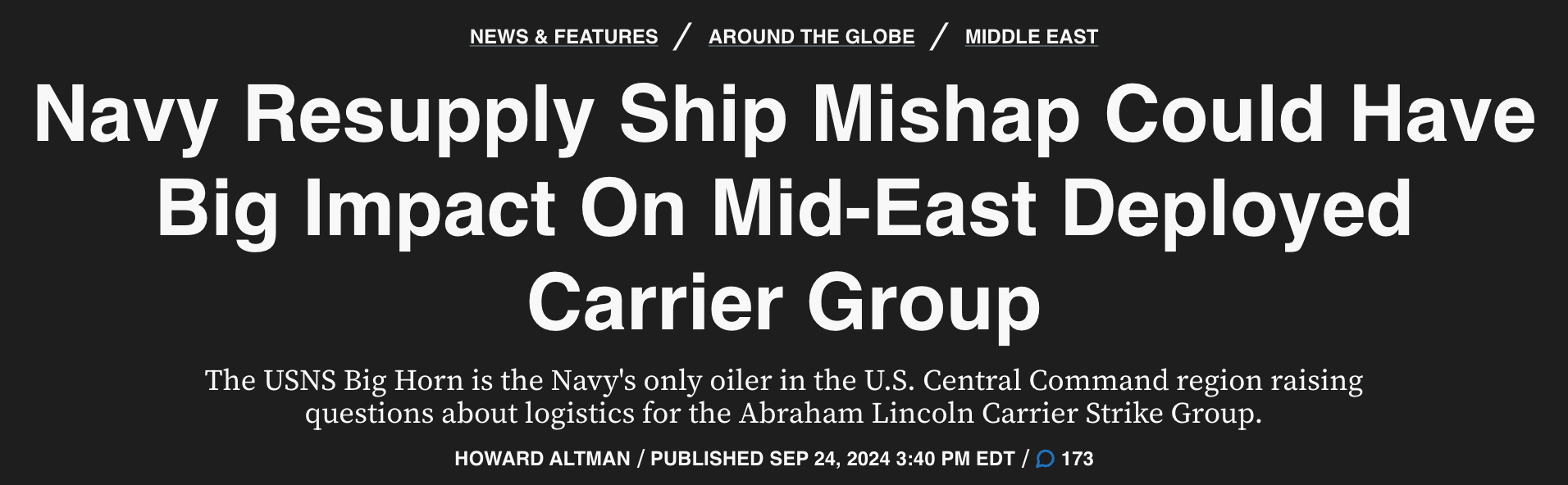
That’s what this piece is about - sustaining the force under fire. Keeping ships fueled, armed, and fed at sea stretches the Military Sealift Command thin. This is true even in peacetime with port calls common and supply lines safe. Sustaining Marines and Soldiers on islands ashore is not much easier. Contested logistics will not go away. In fact, the logistics domain (like the information domain) is one of the warfighting disciplines that is already in contact day-to-day.
This piece dives into the details of US force architecture that provides mobility under fire. Today, we’ll look at sea-based logistics platforms. Then air. Then ground. This piece breaks down:
Lay down of the US maritime logistics fleet: what platforms, carrying what, and at what cost
Quantify the gaps in this fleet: where we need new, more, or different ships
Then follow the responses: budgets, programs, experiments, and leadership
End with a synthesis: what’s getting fixed and what isn’t
Before we jump in, let’s look at one more headline that exposed massive logistics vulnerability. Moving a single Patriot battery between theaters took 73 C-17 flights, over a third of the Air Force’s fleet. Moving a few trucks, a single air defense unit, took a third of our airlift. This type of operation is not sustainable even in peacetime.
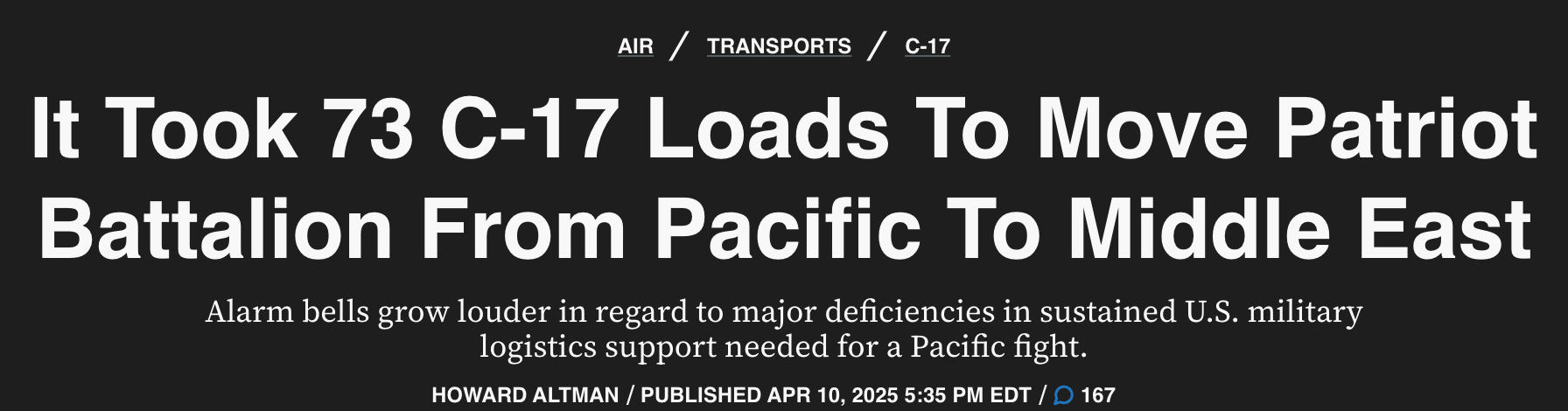
As the headlines above show, logistics are challenging at sea, in the air, and on the ground. This piece will focus on the maritime dimension: what can we move across the water, under fire. Later this year, I’ll publish a similar piece on air mobility. Last, and the hardest to research in the public domain, I’ll look at basing and infrastructure in INDOPACOM. Preparation in these three domains - sea, air, ground - will determine whether we are ready to fight the next war, or maybe whether we have to.
If you only remember one thing: the Pacific fight won’t be decided by who has the best concept of operations. It’ll be decided by who can move mass, distribute it, and keep fighting after taking losses.
Part 1 - The Sea-Based Lay-Down
From Grey Hulls and Surge Sealift to Connectors and Landing Craft
This section lays down what maritime lift capacity US forces have - and structurally explains the gaps. Sea-based lift will have to bear the vast majority of any conflict’s sustainment capacity - “90% of everything” travels by sea - capacity that becomes especially challenging to distribute in support of high-end DMO, EABO, or MDTF doctrine.
Naval forces will need fuel, ammo, and food at sea. Ashore, the bases and pre-positioned units will need replenishment of their stocks. All these forces will need repair and maintenance support and a web of connectors that keep the force mobile and dynamic, rather than static.
Today’s Force and Its Gaps
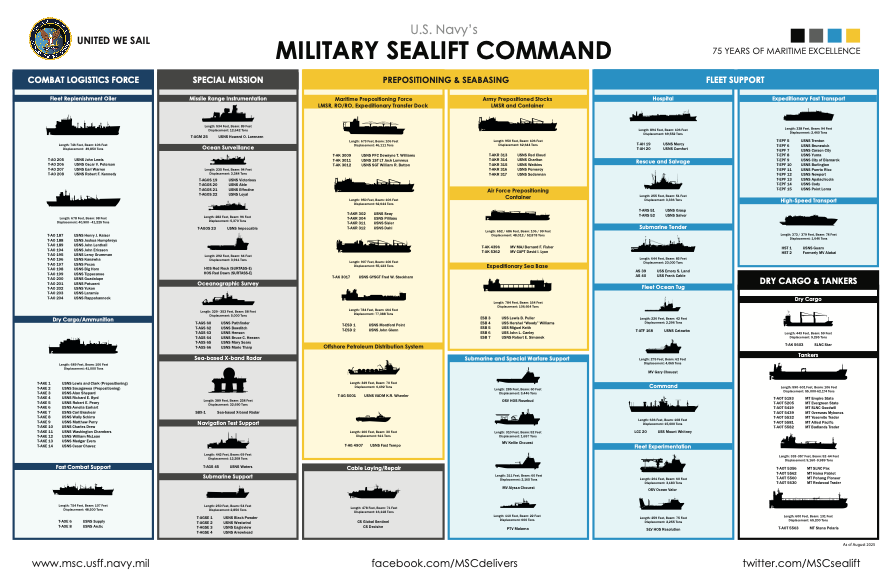
The backbone of today’s sealift is the Military Sealift Command’s fleet of 112 grey-hull logistics and auxiliary vessels.1
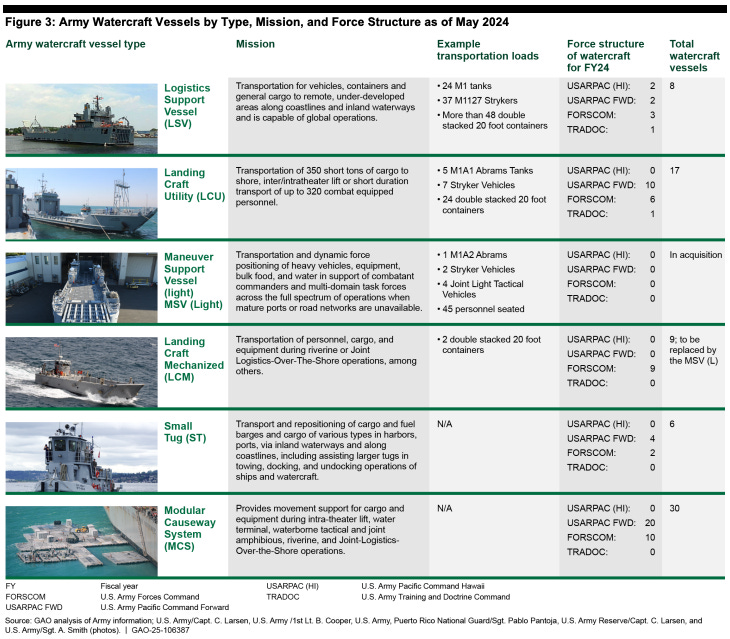
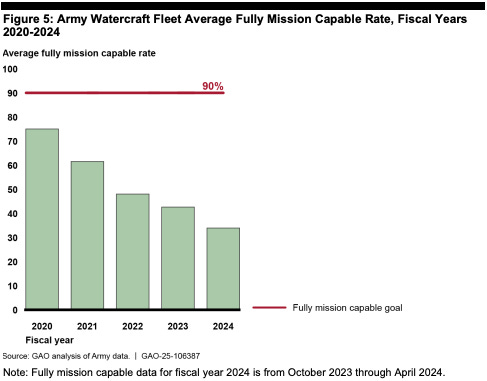
The Army also owns and operates a significant fleet of watercraft, which serve as the primary connectors for littoral forces in theater. They’re smaller than the Navy’s, shorter range, and designed to go shore-to-shore and ship-to-shore. GAO’s count in 2024 shows just 64 vessels left in the Army’s fleet, down from 134 in 2018. Of these 64 vessels, 30 are for the infamous Gaza Pier which fell apart quickly in a relatively uncontested environment. The Army’s top-line connector fleet is smaller than it appears - and shrinking.
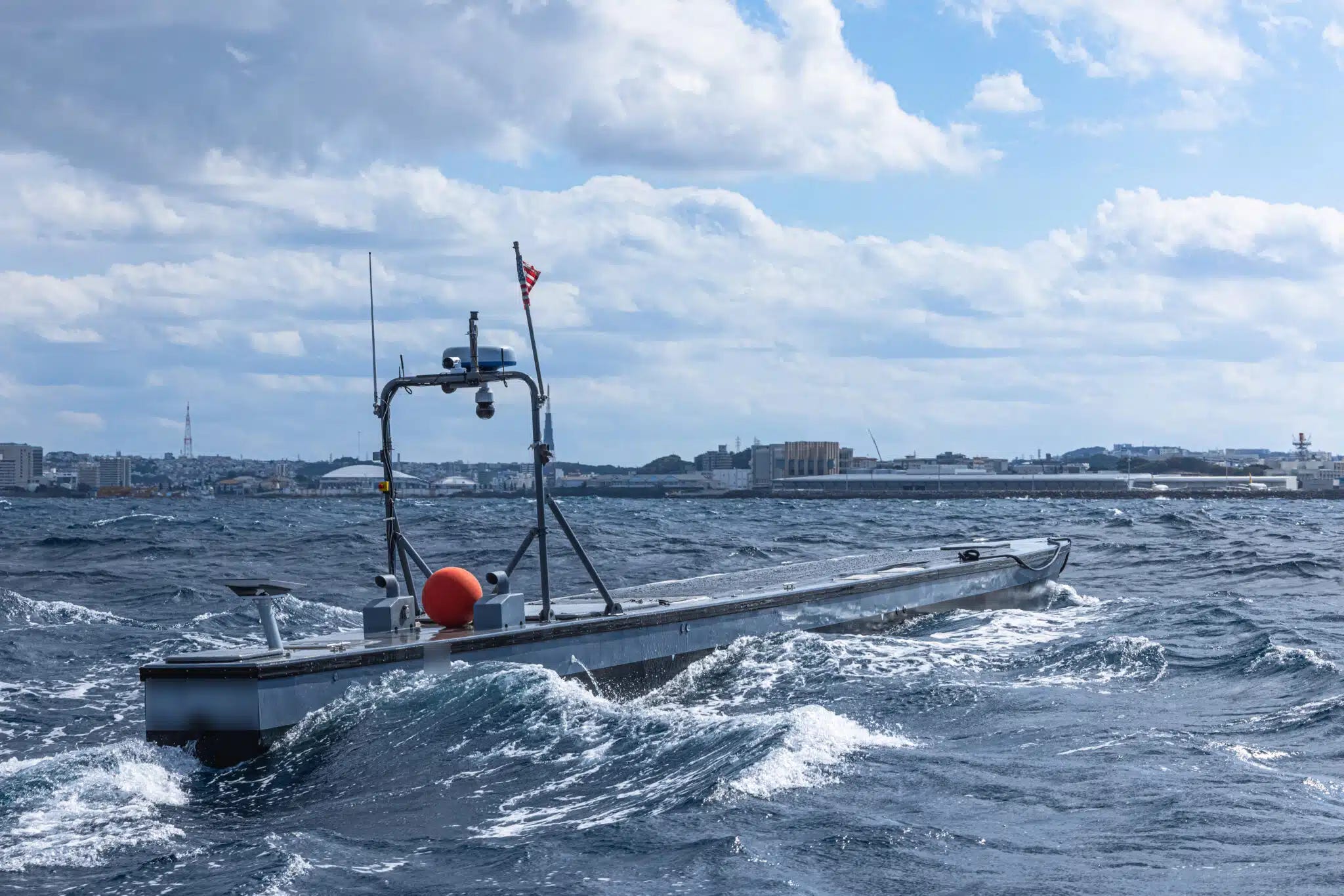
The Marine Corps also operates its own connectors, a fleet of ~60 air-cushioned LCACs that allow Marines to launch and land from amphibious ships, an aging fleet being replaced by newer SSCs. And this year, the Marines’ littoral regiment in Japan has been experimenting with a new Autonomous Low Profile Vessel, effectively the USMC’s very own narco-sub to carry small logistics loads
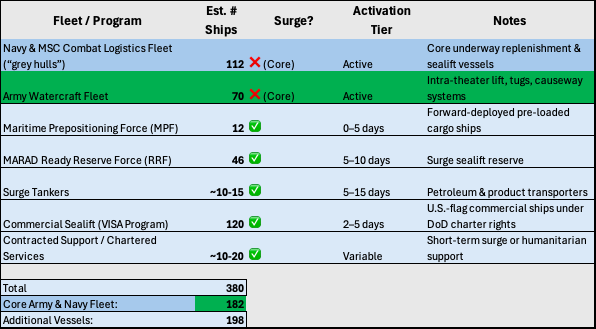
Last, the Navy’s Military Sealift Command (MSC) has the ability to call upon a surge fleet in wartime, which the Department of Transportation and Department of Commerce help sustain in peacetime. This is why we have a Jones Act Fleet. In addition to the joint force’s active 182 Army and Navy vessels, MSC may draw on 12 prepositioning ships, a ready reserve force of 46 sealift ships, an additional reserve of ~10-15 tankers, and a broader selection of U.S. flagged commercial vessels that can be contracted under the VISA program or another commercial charter.
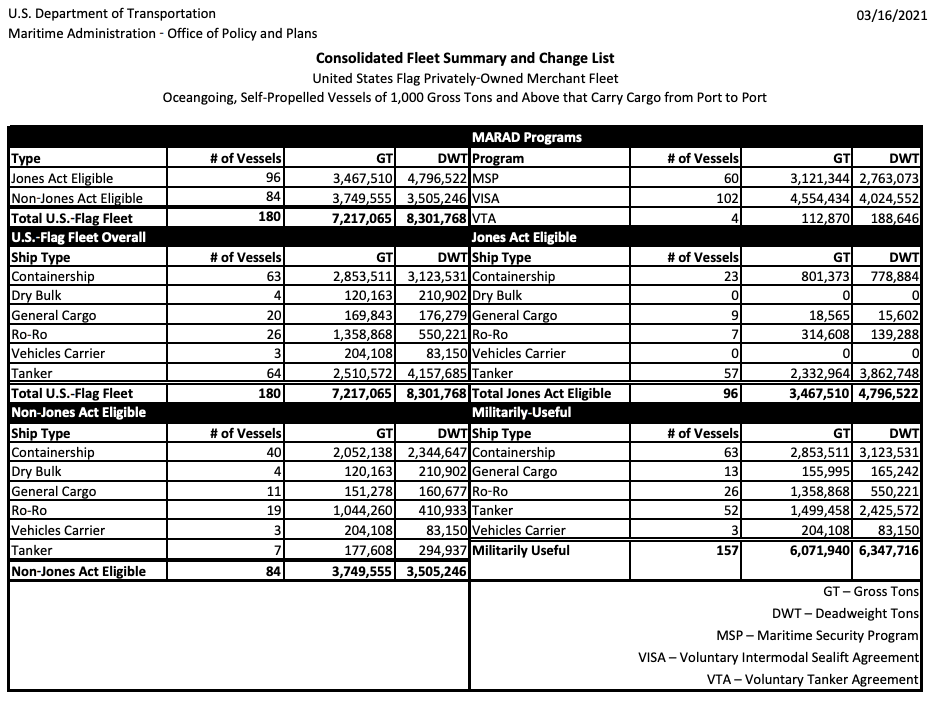
Doubling the Naval sealift capacity sounds great, but Department of Transportation rosters from 2021 show that there are a mere 180 US-flagged ships over 1,000 tons, and only half of these are Jones-Act eligible. Effectively, the entire US-flagged fleet is enrolled in some type of surge program.2
That’s it. We have 182 military vessels and a surge of 200+ civilian vessels. Now, let’s look at the gaps. Agamemnon, Odysseus, and Achilles needed 1000 ships to cross the tiny Aegean - we have far fewer ships, but a battlefield hundreds of times bigger.
Part 2 - The Quantified Sealift Gap
There are three core quantifiable problems with today’s sealift fleet:
Too old to be reliable
Too optimized for an uncontested fight - many large hubs, few distributed spokes
Too small to absorb losses
2.1 What Parts of the Fleet Are Too Old?
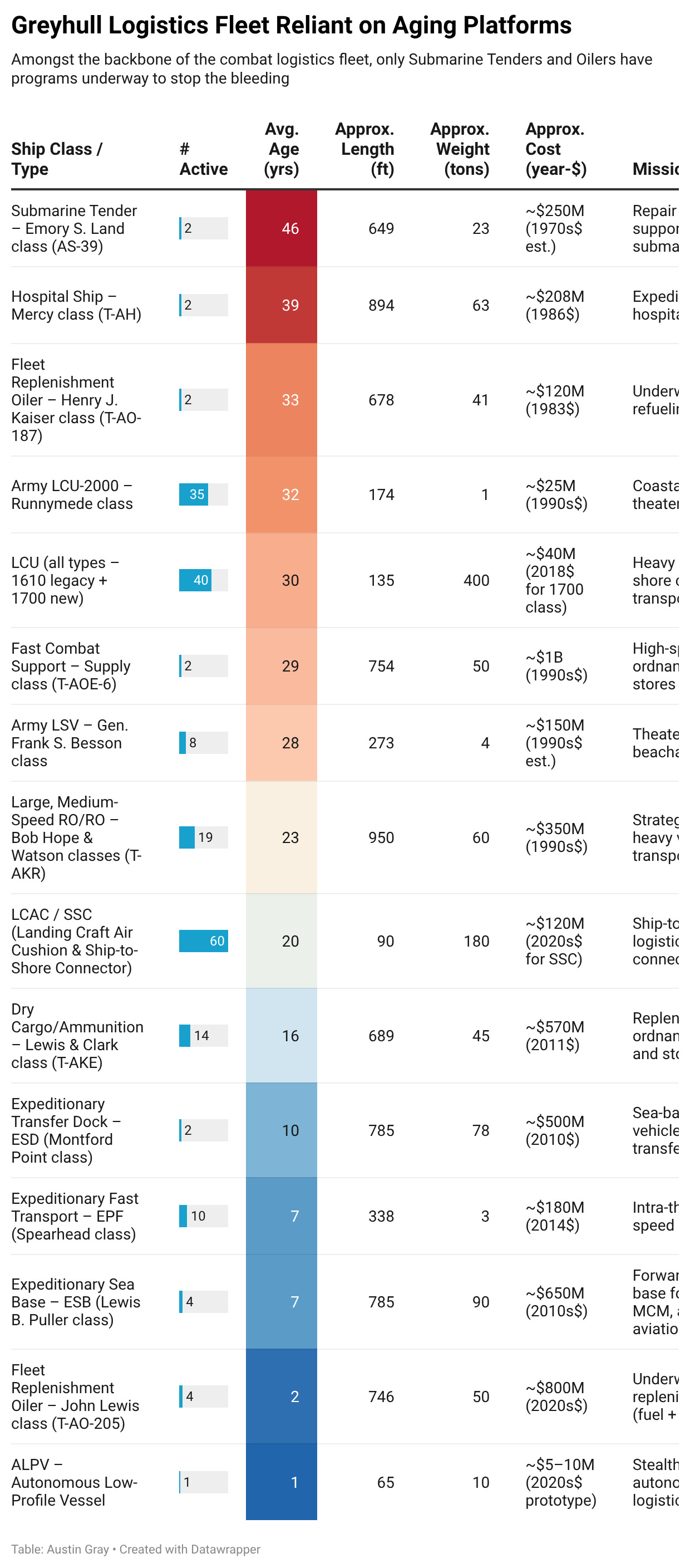
In the below graphic, I’ve broken the fleet - this is a joint fleet view, combining Naval and Army vessels, into four broad mission categories. The vessels in the highlighted area were all built pre-GWOT and likely informed even by Cold War era requirements.
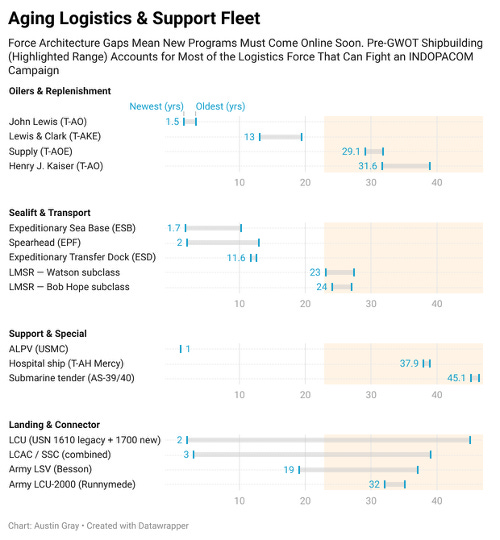
In the first category of oilers and replenishment ships - these are the vessels keeping the Navy’s combat fleet at sea - the bulk of the fleet is old. Supply (T-AOE) and Henry J. Kaiser (T-AO) are the backbone of afloat resupply. They are all 29+ years into their service life, and carry about 3 million barrels of fuel. The rest of the sealift fleet carries only 1 million barrels. Many of the Kaiser class vessels are deep into their fourth decade. Fortunately, the Navy has a new program in full swing, the John Lewis (T-AO) class oiler. More on that later. For more details on this fleet, check out Heritage’s new report - TLDR we can supply ~265,000 barrels per day of fuel to the US Navy’s fleet. This is like refueling 25 destroyers on empty every day, so very good capacity, but it drops quickly in a contested fight.
In Sealift and Transport the critical mission of carrying vehicles between theaters is borne by 15 LMSR (Large, Medium Speed Roll-on/Roll-off) cargo ships. The fleet here is not yet aging out, but it is not young either. Recent shipbuilding in this category has offered GWOT-focused basing and transport.
The Support and Special logistics vessel category makes the rest of the fleet look youthful, and all the ships in this category were built before any of today’s admirals even applied to ROTC or the Naval Academy. The ALPV, an innovative Marine Corps narco-boat is a bright spot and could be the only dot on this chart soon.
Last, the Army and Marine Corps Landing and Connector vessels. They are old too. Most of the Army’s 35 LCU-2000s - easily the largest vessels in this category - are in their fourth decade. The Navy has started a new run of LCU-1700s to replace the Vietnam-era LCU-1610s. The Marines, meanwhile, are building SSC (Ship-to-Shore Connectors) to replace aging LCACs.
To summarize the age challenge, another five years (five years = one Pentagon resourcing OODA loop) would leave significant portions of the sealift force gapped. Although the aging portions of the fleet still exist on paper - such as Army LCU 2000s, hospital ships, and the Navy’s heavy vehicle lift - the GAO chart below shows us that old vessels are not necessarily mission capable vessels.
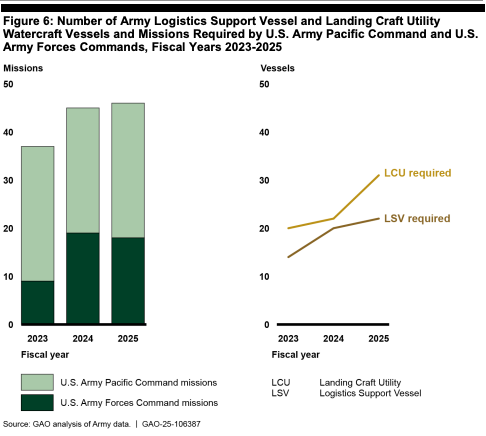
Moreover, even in peacetime, need for them is increasing. The same report shows the growing requirements for small connectors like LCU and LSV in INDOPACOM - at the exact moment this capability is shrinking.
2.2 Is the Fleet Shaped for a Contested Fight?
Since age isn’t crippling enough alone, let’s look at ship capacity and especially at the shape and composition of the force. Today’s fleet is built for an uncontested fight - larger ships are more fuel efficient ships - and not built to execute the distributed warfighting doctrines (DMO, EABO, or MDTF ) that each service has written and started training toward. In order not to rehash the entire need for attritable platforms, I’ll refer newer readers to my piece last year that argued first for cheap, expendable, and attritable platforms that can complement large, expensive platforms. More importantly - every military service must embrace an entire force architecture of expendable, attritable, risk-worthy, and survivable platforms (rather than a single attritable platform).
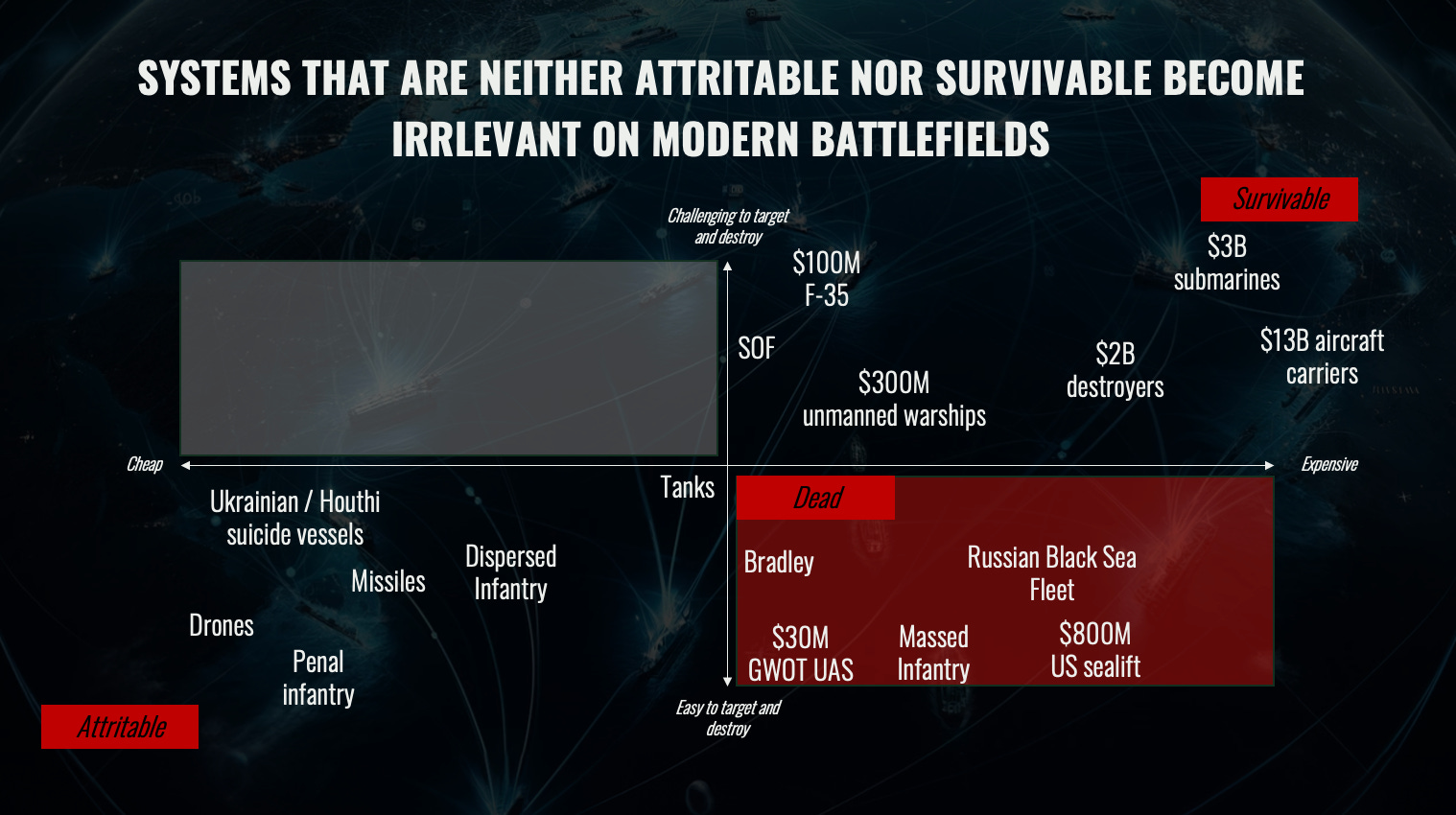
That piece is here: All I wanted for Christmas: Attritable Naval Platforms + A Force Architecture Continuum
The above graphic shows that not a single vessel in the US logistics fleet exists on the attritable corner of the map. None. If we were to re-draft this chart today, the US fleet would have one attritable logistics vessel: ALPV.
The below graphic shows that the fleet is not just old - the Y-axis shows age, so vessels near the top are aging out - but is composed of large, exquisite targets. The X axis on this graphic shows (a log of) the size of the vessel, which is directly correlated to the vessel’s cost and inversely correlated to its ability to operate stealthily in a contested environment. These large vessels are also very slow to replace. One shipyard builds most of them.
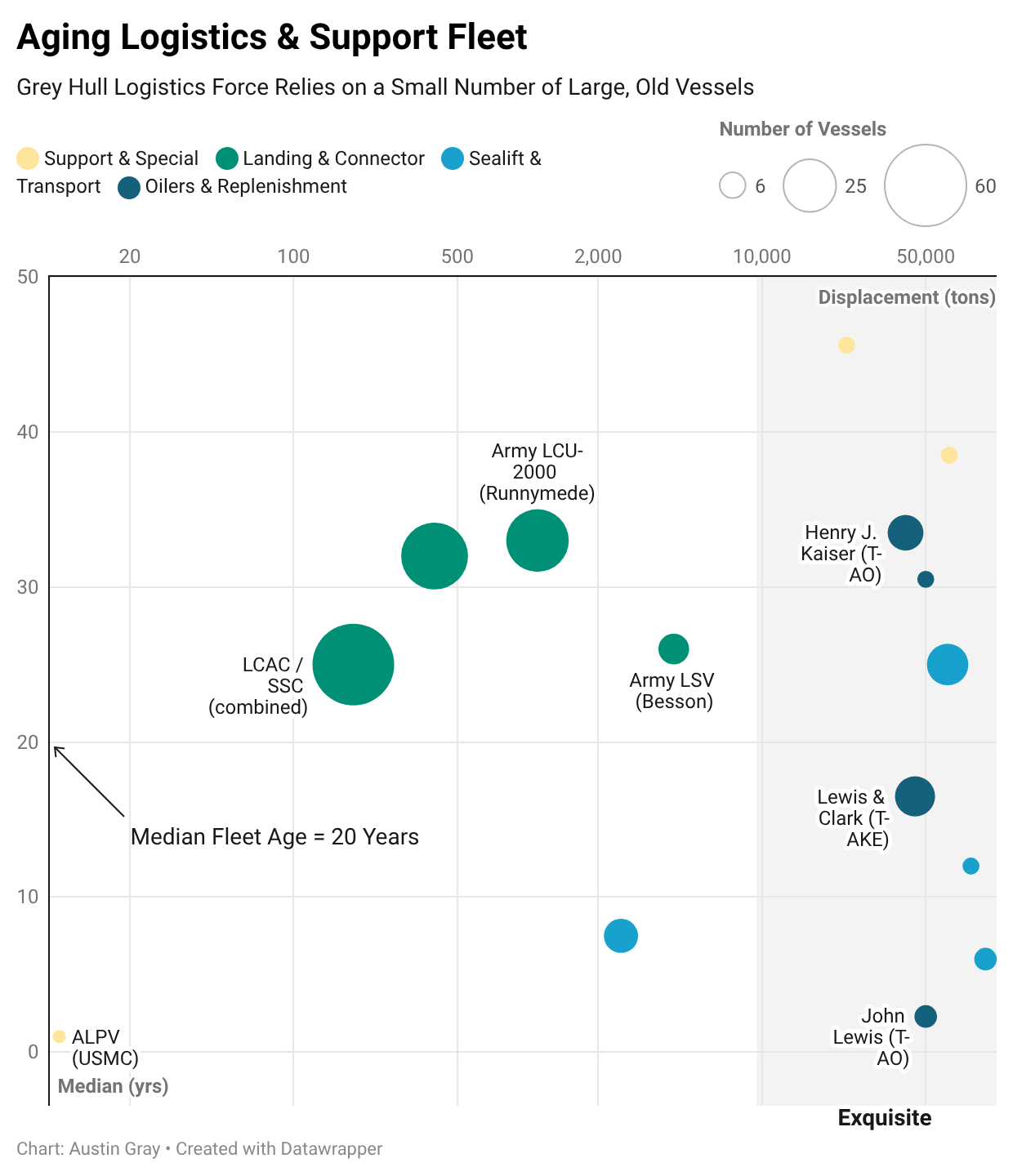
Although I gave the Navy credit for building a new line of John Lewis oilers to replace the aging Kaiser and Supply class oilers, all of this capacity is concentrated on large, expensive vessels. The John Lewis oilers, for example, cost $800M+ per ship. Chinese missiles that can hit them from thousands of miles back cost $10M.
Similarly, for sealift and transport, all the vessels are large and exquisite, except for Expeditionary Fast Transports (EPFs) which cost a mere $200M per ship. Expeditionary Sea Bases (ESB) in particular seem designed for GWOT-era fights where they can sit close to shore as a lily-pad for helicopter-borne special operations forces. However, although they are large and not stealthy, they may prove useful in an INDOPACOM scenario requiring dynamic basing.
All the Support and Special auxiliary ships are exquisite and effectively irreplaceable, with only 2 each hospital ships and submarine tenders. The ALPV remains a bright spot, but with only a prototype vessel, it must enter production to have impact. We might need hundreds of ALPVs, since they carry about 2 missiles each.
Meanwhile, the Landing and Connectors category depicted in green, is the only category where the vessels are small enough to remain risk-worthy in a contested environment. Since these vessels are smaller, the fleet needs many of them, as portrayed by the larger circles denoting many vessels.
In summary, age creates risk to whole mission categories, often acutely within a program, but the fleet’s shape can also concentrate risk in a small number of large vessels, such as today’s large oilers or vehicle transport ships. These vessels that are by definition the most able to fuel the fleet, are also the fleet’s vulnerability. Each oiler lost could degrade 10-20% of our capacity, in a scenario where ~half the oilers are in play. Some of the Navy’s newest ships - such as EPFs or ESBs - have unclear utility in a contested INDOPACOM fight since they were designed with GWOT requirements.
2.3 Is the Fleet Big Enough?
First, size matters. Long-range Chinese missiles threaten a fleet of only large vessels. Lacking large vessels, though, the fleet wouldn’t have the capacity to move all the material necessary for high-tempo combat operations. Small vessels carry exponentially less material than large, and are far less fuel efficient, even when carrying the same amount of cargo. Hopefully, the preceding sections have convinced you that today’s logistics fleet is either stagnant or shrinking, and that where we have newer platforms (with the exception of ALPV) they are not necessarily the platforms we need for the distributed fight.
Today, the oilers and resupply vessels we have race between depots and forward units, and every mission day they have is used up supporting units. Capacity of the fleet is stretched thin in peacetime - it must be bigger for wartime. I have purposefully shied away from trying to estimate the wartime logistics requirements that the joint force may have. Analysts smarter on, more read-in, more resourced for, and closer to the problem than I are responsible for this estimate. And regardless of their work, such an estimate will be a classic Rumsfeld known-unknown.
We don’t really know how much capacity we’ll need in a future fight, how intense it will be, what tactics and platforms will work best. But we do know that in the vast Pacific, we’ll need more lift. As I learned looking at WW2 Britain’s need for ships and planes in a much smaller theater - you always need more.
Part 3 - Who is Solving These Gaps in the Logistics Fleet?
3.1 Budget Signals
Out of the Pentagon’s ~ $1,000B budget, only about $15B per year is building mobility for a contested fight in the Pacific.
Four Takeaways From the Contested Logistics Budget
$15B / $1,000B = 1.5%
This number suggests budget folks don’t care about contested logistics
Reconciliation is great - but only boosts to $24B or 2.4% of the defense budget
Most contested logistics spending goes to air platforms
The maritime mobility that we are buying = big targets
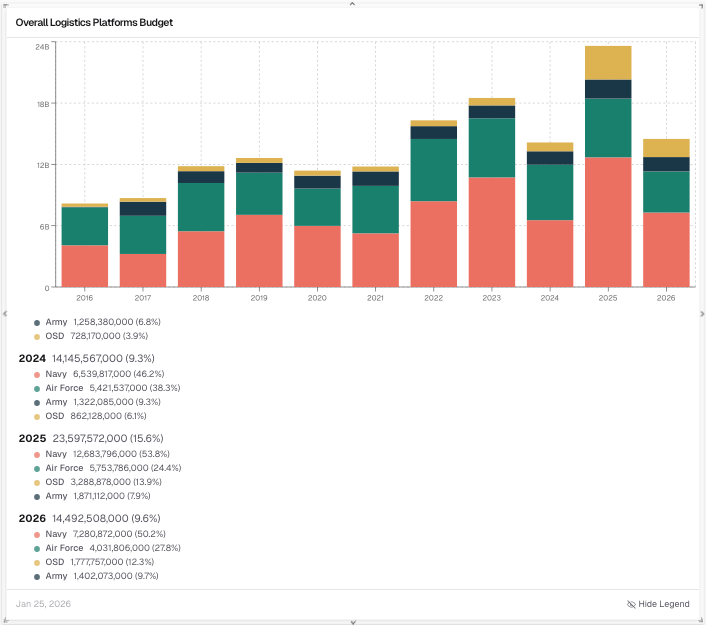
In a highly subjective exercise, I pulled 120 budget lines that I would argue are building contested logistics capability. Most of these lines focus on R&D or Procurement to develop and buy platforms that will fight inside the WEZ, but several also focus on building key infrastructure and readiness. Of note, there are much larger O&M budgets that provide most of the day-to-day fuel, ammo, and consumables that I left out.
Below is a table of all 120 lines. If you sort by the 2025 line - this is the last year DoD gave us real J-Books and includes the reconciliation lines - you can see what maritime platforms we’re adding to the logistics force. T-AO John Lewis Oiler and Landing Ship Medium are the two standouts, with Surge Sealift, Salvage Ships, and Ship-to-Shore Connectors close behind.
Most of these lines fund aircraft, not maritime platforms. If you sort by 2024 or 2026 (which don’t include reconciliation money) you’ll struggle to find a ship or boat amidst all the air mobility platforms. Worse, all the maritime platforms we are budgeting for are big expensive targets - especially the John Lewis Oilers. Calling a ship “combat logistics” doesn’t help it be good at combat when missiles start flying.
Only $12B of $150B of Reconciliation Spending Went Toward Logistics
Below, I’ve listed the reconciliation lines that fund sea-based logistics capacity. These lines make up about $8.5B of the entire reconciliation bill. Another $3.5B went toward air, ground, and other infrastructure logistics capacity for INDOPACOM, topics we’ll cover later in this series.
Reconciliation Spending Lines:
Littoral:
Marine Corps Amphibious Vehicles - $241M USMC
Ship to Shore Connectors - $300M Navy
Landing Craft Utility - $295M USMC
Landing Ship Medium - $1,964 USMC
Leasing of Ships for Marine Corps Activities - $159M USMC
Sea:
Rescue and Salvage Ships - $500M Navy
National Defense Sealift Fund - $600M Navy
VLS Reloading at Sea - $80M Navy
Light Replenishment Oiler (Advanced Procurement) - $100M Navy
T-AO Oilers - $2,725M Navy
Amphibious Warships - $1,470M USMC
Congressional Adds Show Innovative Bright Spots
One problem with counting budget lines above is that the most expensive lines jump out, and the tiny ones melt into the background. Counting budgets is an activity-based metric that doesn’t necessarily result in a better logistics outcome. If we look deep in the congressional budget documents, we’ll find tiny additions for new solutions that point to bets placed on future outcomes. Here are my favorite congressional adds (fresh from the joint Senate-House appropriations budget) that might just help build a more distributed combat logistics force on the water.
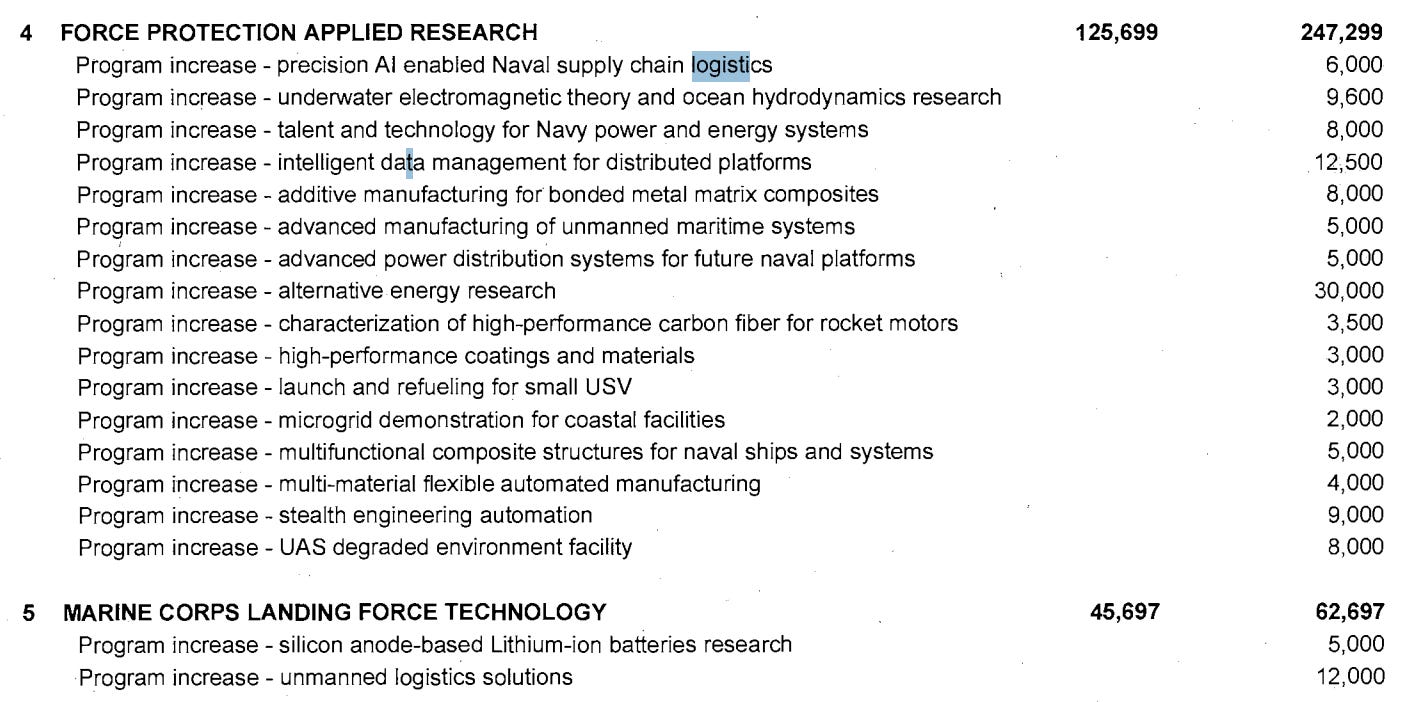
A few lines above jump out showing investment in tech for Navy supply chain, power generation and distribution, logistics data management, UxV refueling, and unmanned landing capability.
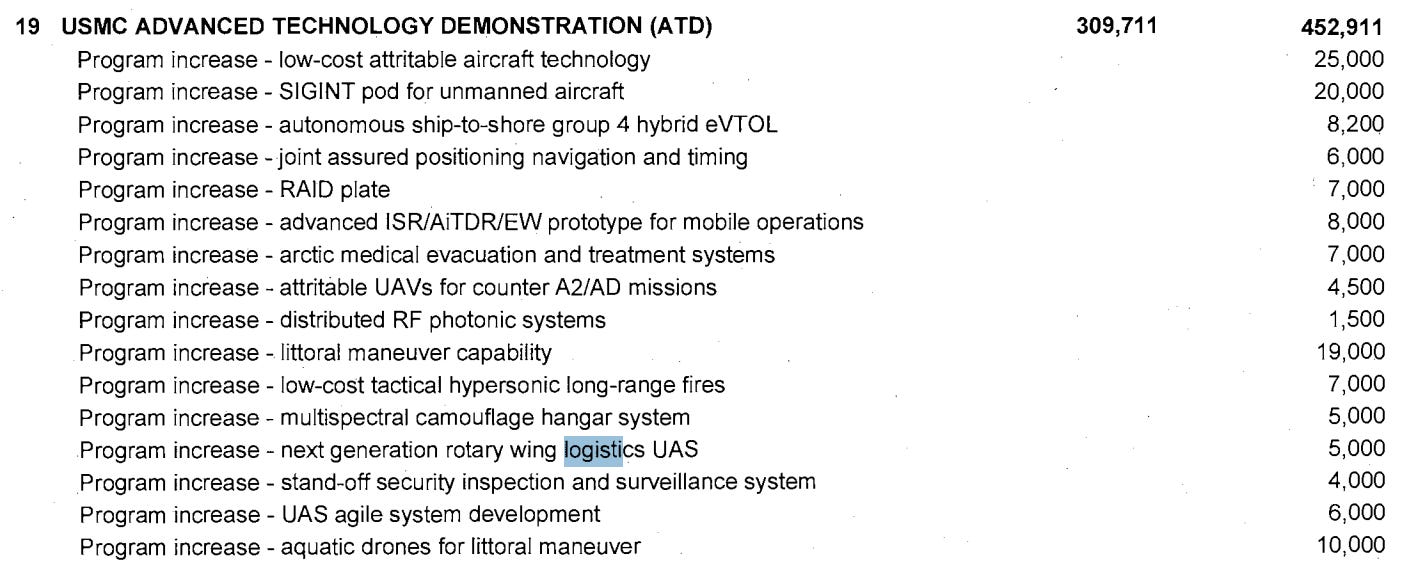
Above, the Marines have a pretty exciting “littoral maneuver capability” funded at $19M - this is a big congressional add. They also have bets on ship-to-shore mobility and aquatic drones, among other contested logistics investments. Note that this budget line “USMC Advanced Technology Demonstration” says nothing about logistics - BUT many of the bets being placed by Congress and the companies lobbying for these lines are bets on attritable logistics solutions. This is true because everyone knows we’re underinvesting, especially the appropriators who run the budget process.
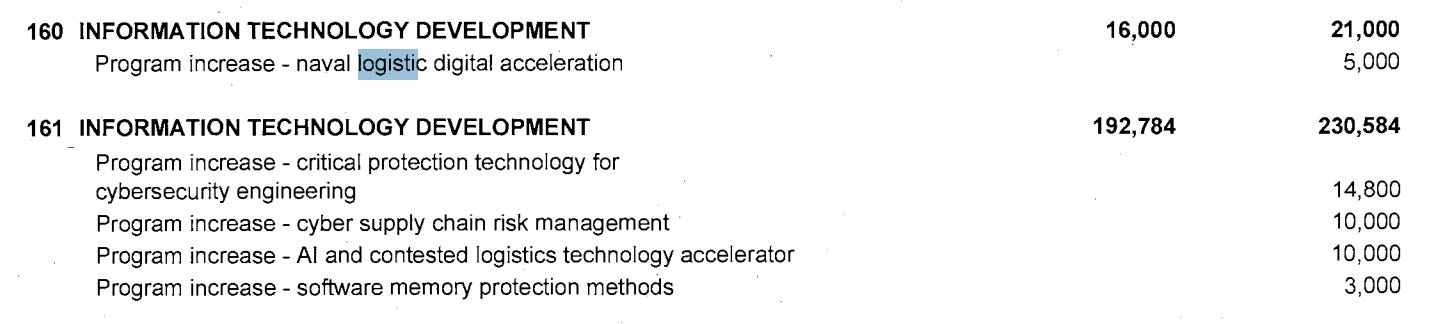

Here are a few more lines showing IT and software investments for naval logistics.
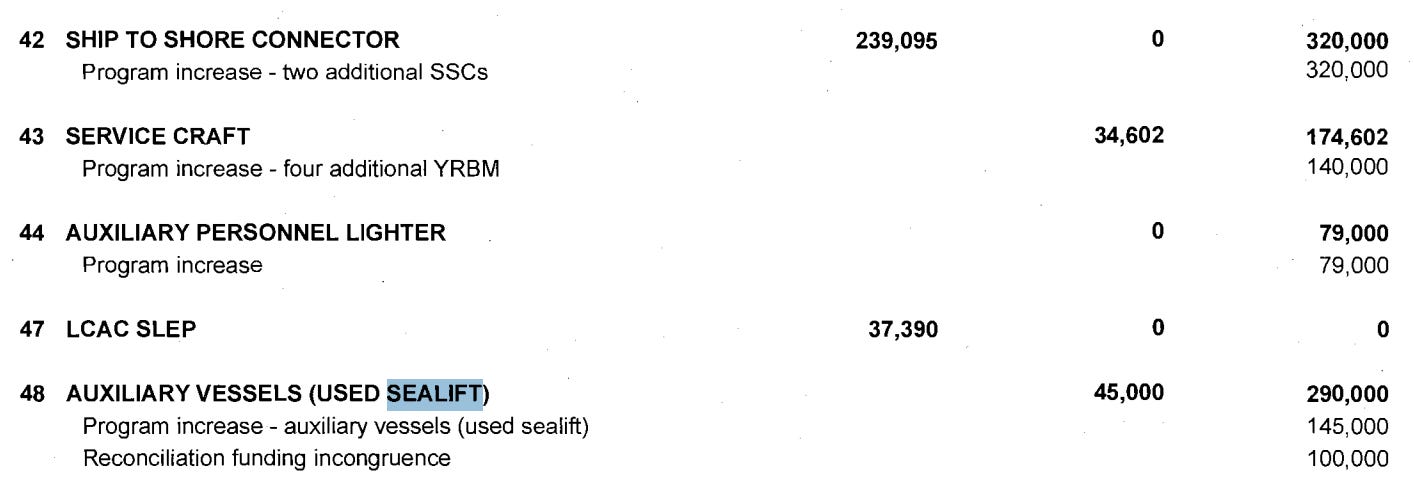



And here are lines boosting a few of the key maritime mobility platforms we’ve been looking at, like SSC. For Medium Landing Ship (LSM) it looks like Congress is adding more vessels, which is on top of the significant investment in LSMs made by reconciliation. More on the LSM program in the next section. Used sealift - not a term I’ve found defined by Military Sealift Command - sounds like a scrappy way to get more sealift vessels quickly, and other language in the Senate JES suggests this $145M will purchase two used vessels for the National Defense Reserve Fleet. I don’t know what the Platform Supply Vessel Pilot program is, but would love to find out. There are also numerous congressional adds for small UAS, USVs, and UUVs - some of these likely conduct logistics missions but it’s not clear from this publicly facing data.
As a wrap on the budget section, I’ll summarize the high level budget activity against our four categories of logistics platforms.
Oilers and Replenishment: major investments in John Lewis Oilers from Reconciliation
Sealift & Transport: 🥶
Support and Special: Solid last minute investment in auxiliary vessels from the most recent congressional budget documents
Landing & Connectors: heavy investment in SSC and especially LSM
Navy and Marine Corps own these lines, and should be thankful for the Congressional support
Army landing craft - go look at the MSV and Watercraft lines - are flat or even down in budget. Not good.
3.2 Programs and Prototypes
Although budget documents are the best quantifiable data on what solutions government is prioritizing, there are a few more ways we can see into the churning bureaucracy’s attempts to build contested mobility capacity for the Pacific. Additionally, we can often see more of what private industry is doing, knowing where government needs help.
In this section, I’ll run through the existing and nascent programs, and summarize other activity I’ve detected in each.
Oilers and Replenishment
John Lewis Oiler - We covered the massive budget investments, that’s what matters for this program. Of note, Heritage’s report last week suggests that the last few oilers commissioned are not yet ready for deployment.
Next Generation Logistics Ship (NGLS) - Big Navy is developing a lighter oiler too, which will complement John Lewis but likely take a few years to start arriving.
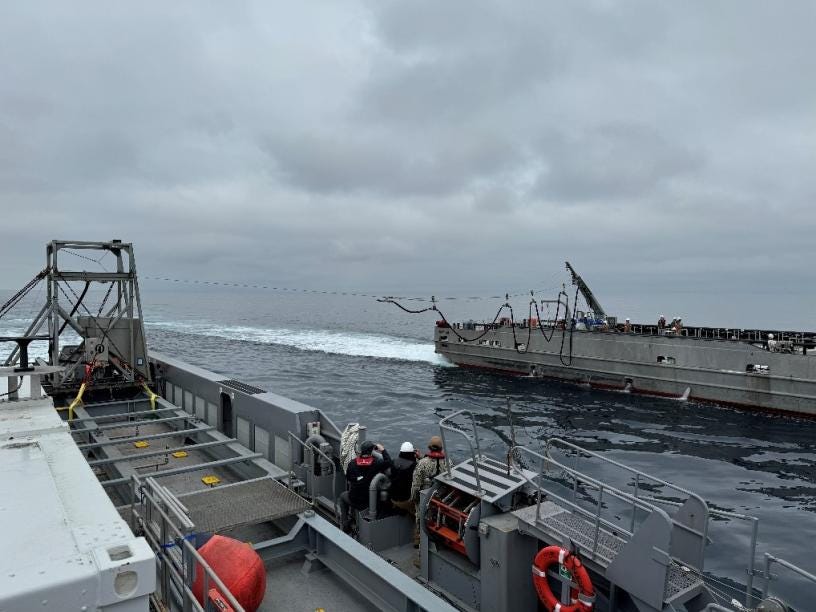
Unmanned Refueling - Last year, DARPA and the Navy together conducted the first refueling at sea between unmanned vessels. Neither of these vessels is built as a refueler, but the test likely demonstrated key interfaces, technologies, and techniques.
Sealift and Transport
Expeditionary Sea Base - The Navy continues to build these, and they’re cool, but big targets. Like the John Lewis Oilers above, they’re built at General Dynamics NASSCO in San Diego, making this shipyard an essential national resource.
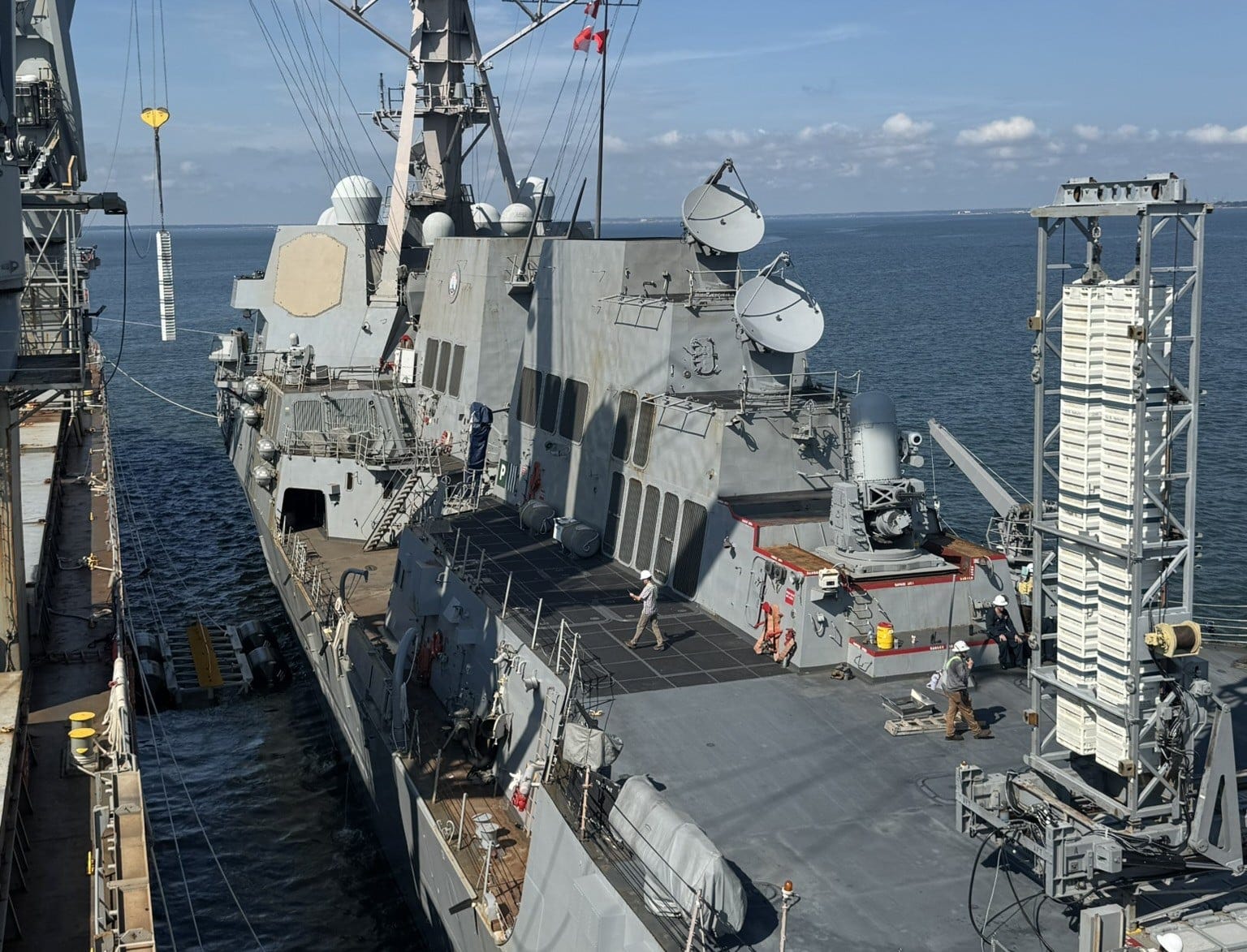
Re-Arm At Sea - With combat experience in the Red Sea, the Navy re-learned that it could run out of ammo quickly in a real fight. It has worked to build re-arm at sea capability with an emphasis on re-loading missiles into VLS.
I haven’t seen any other movement in the major sealift programs, but am inspired by the national-level emphasis on growing our maritime industrial base - this will expand the Jones Act fleet that serves as the backbone of reserve sealift. The reconciliation spending on used sealift makes all the sense in the world.
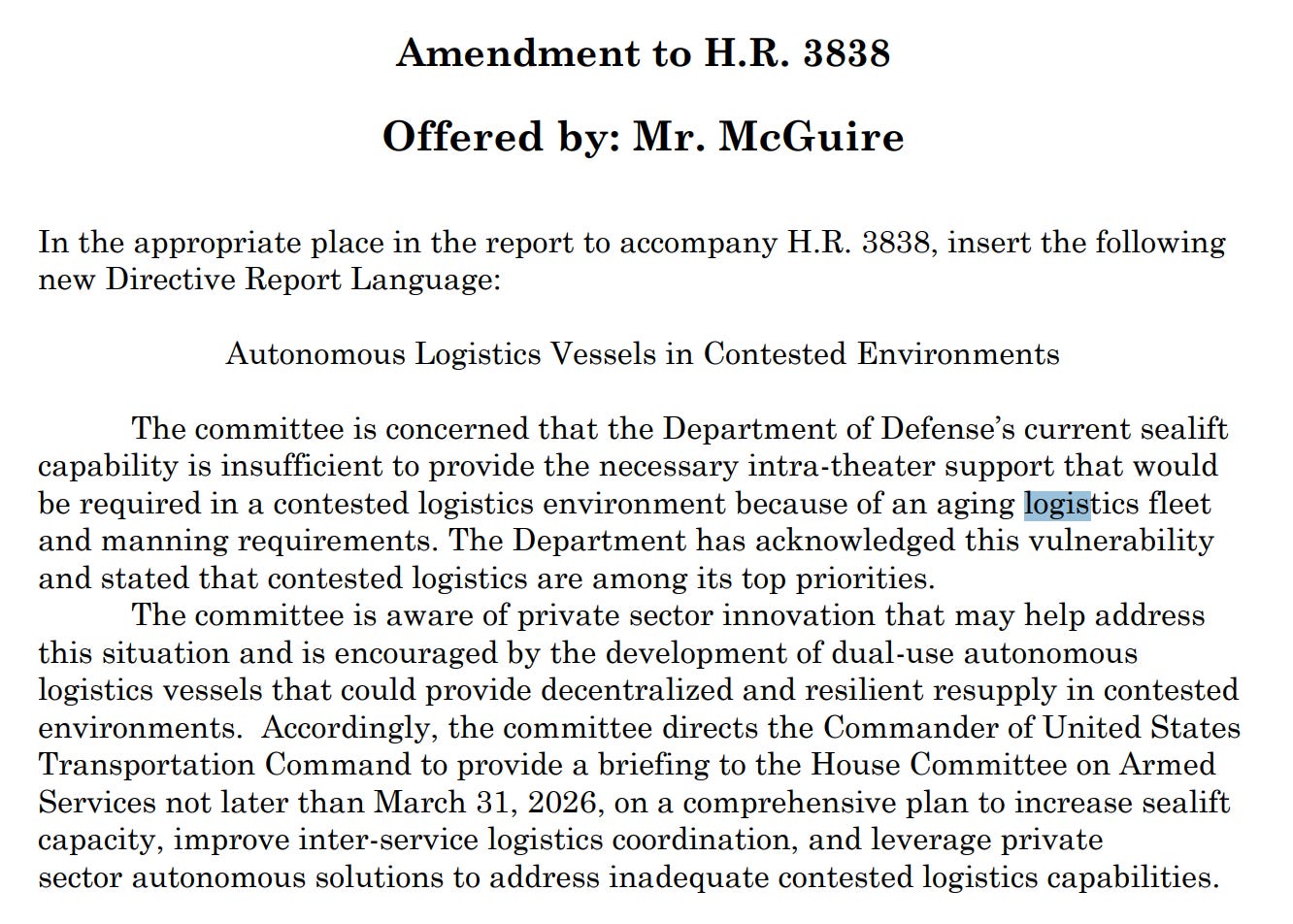
Although there is a lot of talk and potential for unmanned surface vessels - among other attritable platforms - to support the sealift mission, little has yet been done. Congressman McGuire, a Navy Veteran recently elected to represent VA-05, asked the Navy to report back last year.
Support and Special
Sea-Based Petroleum Distribution System (SPDS) - An (undersea?) refueling bladder that one retired officer’s LinkedIn describes as creating fuel “puddles,” rather than “lakes” to distribute forward refueling capacity forward.
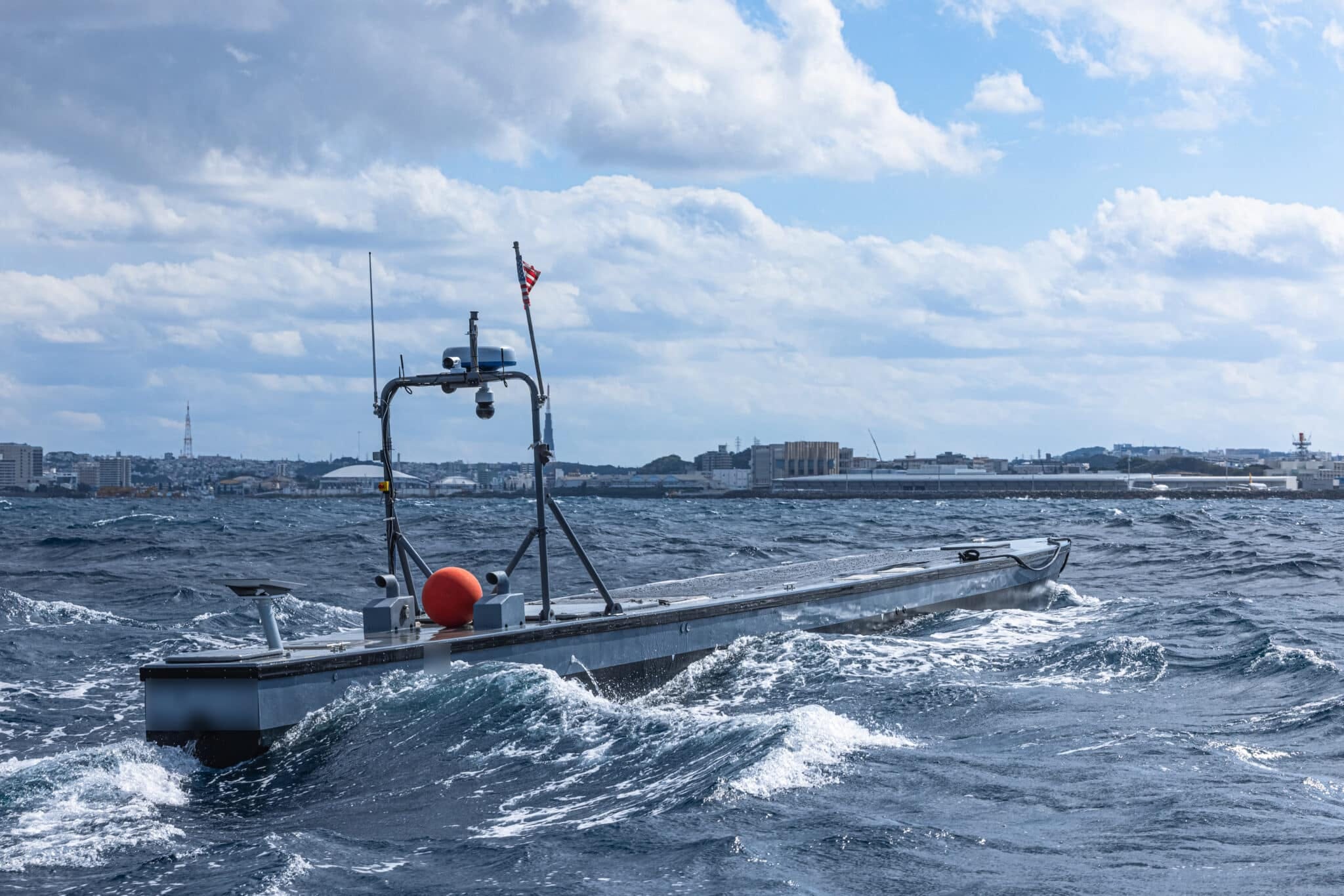

Autonomous Low Profile Vessel (ALPV) - The Marines have been testing their semi-submersible USV in the Western Pacific. I first heard about ALPV back in 2023 and have enjoyed watching it move from MCWL to a Marine Littoral Regiment, a real operational unit in Japan. The screenshot from 2025’s defense budget above shows it had a plus-up (from both houses of Congress) but this budget never got passed since we went to a continuing resolution. Although the Congressional Add was for $6M, this number likely includes a lot of prototyping and testing activity, maybe more than one ALPV. I’ve heard the cost of the platform is much, much cheaper than $6M.
There is one massive problem with ALPV: it’s been around for 3 years, it’s cheap, it’s tested operationally - so why aren’t we building more? If all these things are true - it looks like a simple set of hardware components not bottlenecked by military-specific supply chains - and ALPV fills a unique gap in the sea-based logistics force architecture, then the problem is its acquisition strategy. Some Marines need to move out and get ALPVs into production.
Landing and Connector
Navy LCUs - This program is getting going, with Austal building and Navy looking for a second shipbuilder.
Navy / USMC SSCs - I haven’t seen much special from this program aside from lots of extra money from Congress, so let’s assume it’s moving healthily
Navy / USMC LSM - This is probably the biggest programmatic story of the year in the contested logistics space. Secretary Phelan’s office produced the above sleek launch video to announce its new LSM design - a commercial design already fielded by Damen. Not only is Navy using a commercial design instead of spending years in a requirements spiral - “we’re changing how we do business in shipbuilding, ” per the CNO - but the Navy & Marine Corps shipbuilding team moved out with the new design less than a year after canceling the previous LSM that was over budget and behind schedule. Bollinger received the award to start building LSMs, and rumor has it that Navy may bring additional yards online to keep this program competitive.
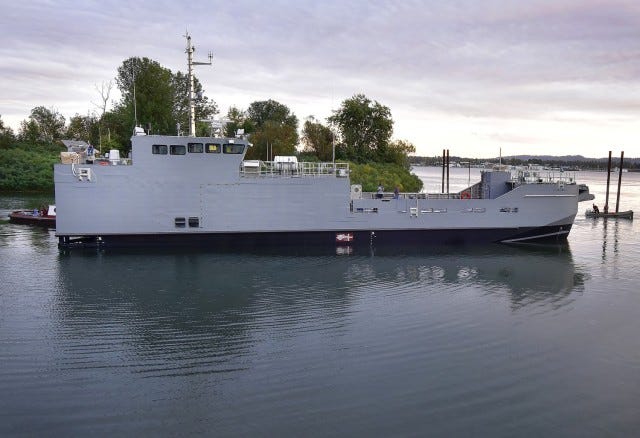
Army Programs - With aging LCUs and a causeway system that failed during a real operation last year, Army watercraft need some help. The biggest funded program is Maneuver Support Vessel, whose MSV-L prototype is undergoing experimentation with USARPAC, according to MG Gardner who leads the Army’s logistics efforts in the Pacific. However, with cost estimates for the MSV-L doubling from $30 to $60M, the Army seems to have scaled back its plan for production of MSV-L to only 5 more vessels. Nothing has been said publicly about the larger MSV-H for a few years.
The Army’s new watercraft strategy takes a portfolio approach to sea-based mobility. According to Defense News it “prioritizes sustaining an aging fleet, leveraging commercial solutions and accelerating experimentation with autonomous vessels, according to senior service leaders who helped craft it.
The new strategy, which has yet to be published publicly, takes “a much more holistic or comprehensive approach to Army watercraft,” Lt. Gen. Karl Gingrich, the Army deputy chief of staff G-8 chief, told Defense News in a recent interview.” We should look out for more arrows unleashed from this quiver soon.
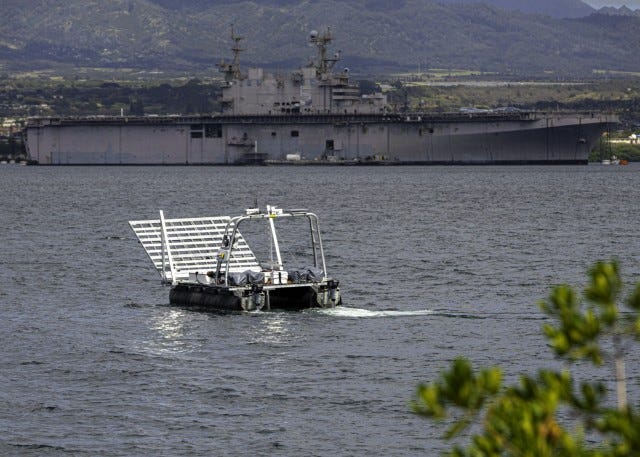
Last year, the Army’s xTech challenge put out a topic to help defend watercraft from UxV attack. This is an important bet on keeping its current fleet in the contested fight, and it looks like cheap USVs like Havoc AI’s Rampage may have participated as escorts. Army experimentation in Hawaii has been incorporating logistics USVs too, like the above photo depicting a landing USV moving through the littorals. USARPAC units have also been using exercises like Talisman Sabre to stress logistics capabilities, like moving vehicles with Australian partners or pumping fuel over the shore using the JPOTS capability.
Army-Navy Pier (the causeway, not the football game) - This capability, known as JLOTS, got very unfortunate coverage during the American effort to supply food and material to Gaza at the height of Israel’s invasion. The pier broke apart in standard Eastern Mediterranean chop - the Western Pacific is much worse - and brought national political scrutiny and an investigator general report. The IG concluded that neither the Army nor the Navy had conducted sufficient training or maintenance.
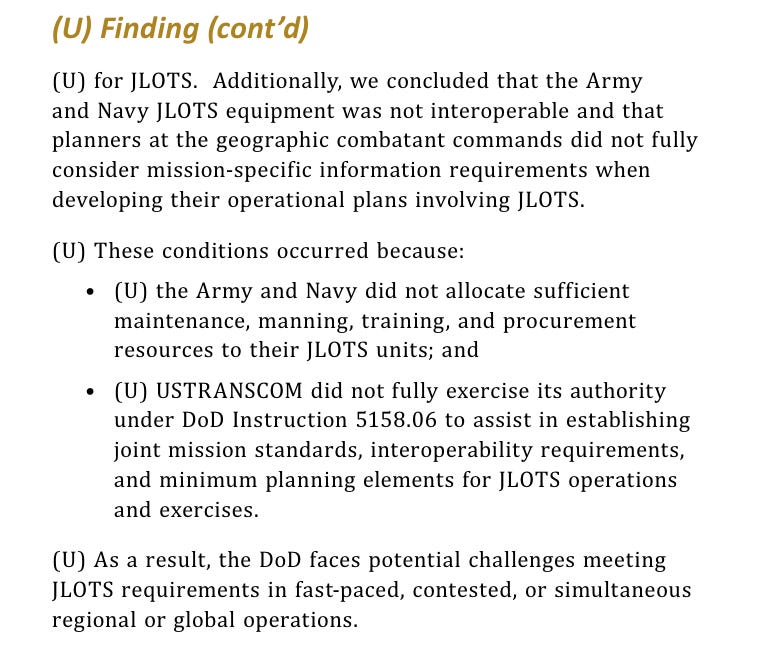
What’s the next logistics capability that we’re assuming works - but it doesn’t on game day? What does the Army really know about chop…?
3.3 Executive Branch Leadership, Strategy, and Testimony
Zooming out even further, we can look at how the military services - and the whole US government - are thinking about contested logistics in the Pacific. They aren’t resourcing the problem enough, but words can suggest where they may start soon.
The Navy has done an admirable job standing up units to operate USVs and UUVs under Fleet Forces and under its operational fleets. Just a few months ago, it stood up its third USV squadron USVRON 7, which operates small USVs forward in the Pacific. USVRON 1 is the unit that collaborated with DARPA to conduct the unmanned ship refueling experiment I referenced earlier. Although this piece is not about unmanned, I bring up the establishment of new units as a signpost of caring about a problem. You need sailors, org chart, and empowered commanding officers - e.g. focused units - with a clear mission if you want to evolve to face new challenges. The Navy has done this with UxVs but it’s unclear they’re doing anything differently on the org chart for logistics.
The Navy has long had a paper doctrine of Distributed Maritime Operations, and only recently has started to build the key platforms such as USVs and smaller combat logistics vessels, that can operationalize it. The Congressional report linked above notes that much of the Navy’s DMO acquisition strategy focuses on procuring longer range systems - a valid but expensive strategy. The Navy owes Congress a new shipbuilding plan any week now, with the President’s Budget.
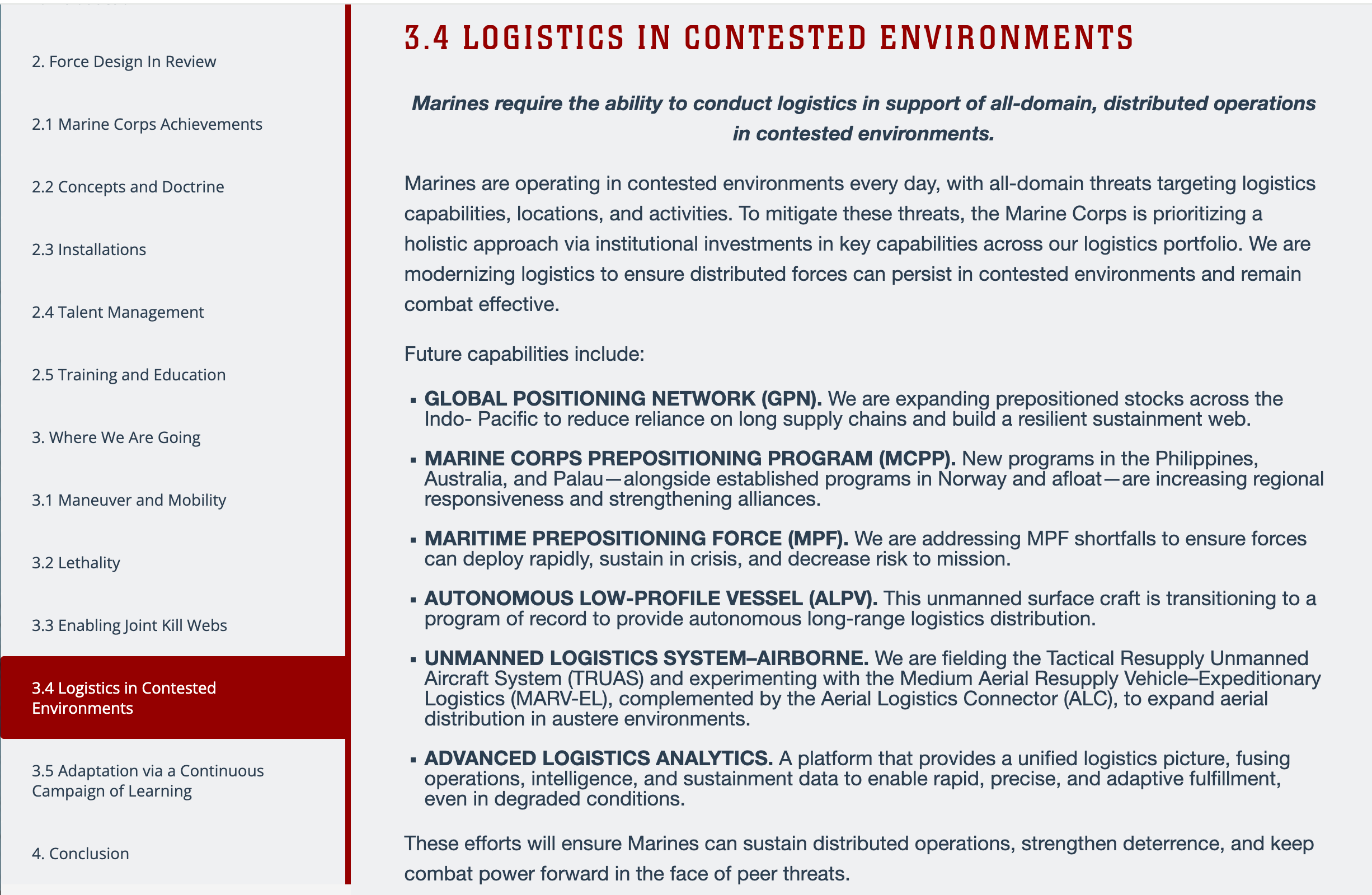
Although Big Navy hasn’t spent much effort on logistics, the Marines seem much more stressed out by the challenge ahead. They’ve even started standing up Marine Littoral Regiments built to maneuver in the archipelagic battlefields of the first island chain. The Marines emphasize littoral maneuver and “Logistics in a Contested Environment” - both enabled by key platforms such as LSM and ALPV - loud and clear in their Force Design 2030.
The Army, with its crippled watercraft fleet, established a cross-functional team under Army Futures focused entirely on contested logistics. Moreover, it has held a contested logistics industry week the past few years. Hopefully these resourcing moves are long lead indicators of great Army mobility solutions in the pipes. Although Army displays solid focus on contested logistics in its resourcing teams, the new MDTF doctrine doesn’t have any special focus on logistics in a contested environment.

At the joint level, DoD CTO Emil Michael’s re-prioritization from 722 critical tech areas down to just 6 shows that Contested Logistics is a top-6 Pentagon-level priority. These priorities matter, because they drive programmatic dollars for major prototyping and experimentation programs, such as APFIT.

At the assistant secretary and deputy assistant secretary level, the Sustainment and Material Readiness offices seem busy, focused, and hell-bent on attacking contested logistics. I highly recommend following their LinkedIn pages to stay plugged in on events. Although this is not a formal strategy document saying “logistics are important” the informal repetition of priorities, showing up at events, giving industry feedback, distributing solicitations - this is what leadership looks like and this is what accelerates the market to solve problems.
Senior leaders of the joint force, such as combatant commanders and service chiefs, regularly acknowledge the contested logistics challenges in Hill testimony and other public statements, but these affirmations are not really strong or precise enough to attribute future or forward action against the problem.
Unfortunately, the new National Defense Strategy forgot to use the word “logistics.” Despite White House leadership, it didn’t even use the word “shipbuilding.” Same for the National Security Strategy. Not good.
PART 4 — SYNTHESIS: WHAT’S ACTUALLY GETTING FIXED (AND WHAT ISN’T)
The Quantified Sealift Gap vs. Solutions
Looking back at the three core quantifiable problems with today’s sealift fleet, we can compare each to the solutions:
The fleet is too old
Aging connectors like LCU —> new connector programs like LSM coming online
Navy & Marines are doing okay here, Army seems behind
Fleet oilers → Navy has made big investment in John Lewis Oiler, and is kicking off NGLS
Special mission ships for medical care, submarine tending, and more —> There is no evidence that anybody with power in the government is solving this problem
The fleet is too small
1.5% of the defense budget goes to contested mobility solutions. 99% of this money is to re-capitalize aging conventional ships not grow the fleet
Reconciliation is nice, but only amounted to an extra 1% of defense spending on maritime logistics capabilities. One time. The regular budget is flat.
Top line increases in defense spending, which have only become realistic in recent weeks, offer hope.
The fleet is built for an uncontested fight - too many large hubs, not enough distributed spokes
ALPV and other USVs have shown success in experimentation but have not moved beyond prototypes for logistics missions.
The emptiness in the bottom left of the below chart must be filled by platforms affordable enough to risk in contested environments.
Experiments with these platforms are happening in warfighting units and at private companies, and Congress is legitimizing some of this activity with targeted budget plus-ups
This has to change. Not only because these are the platforms that can fight the distributed doctrine, but because the budget can’t buy more big oilers. It can buy small, cheap systems.
The American industrial base can also make them much more easily.
Most of the budget is still going to legacy sealift
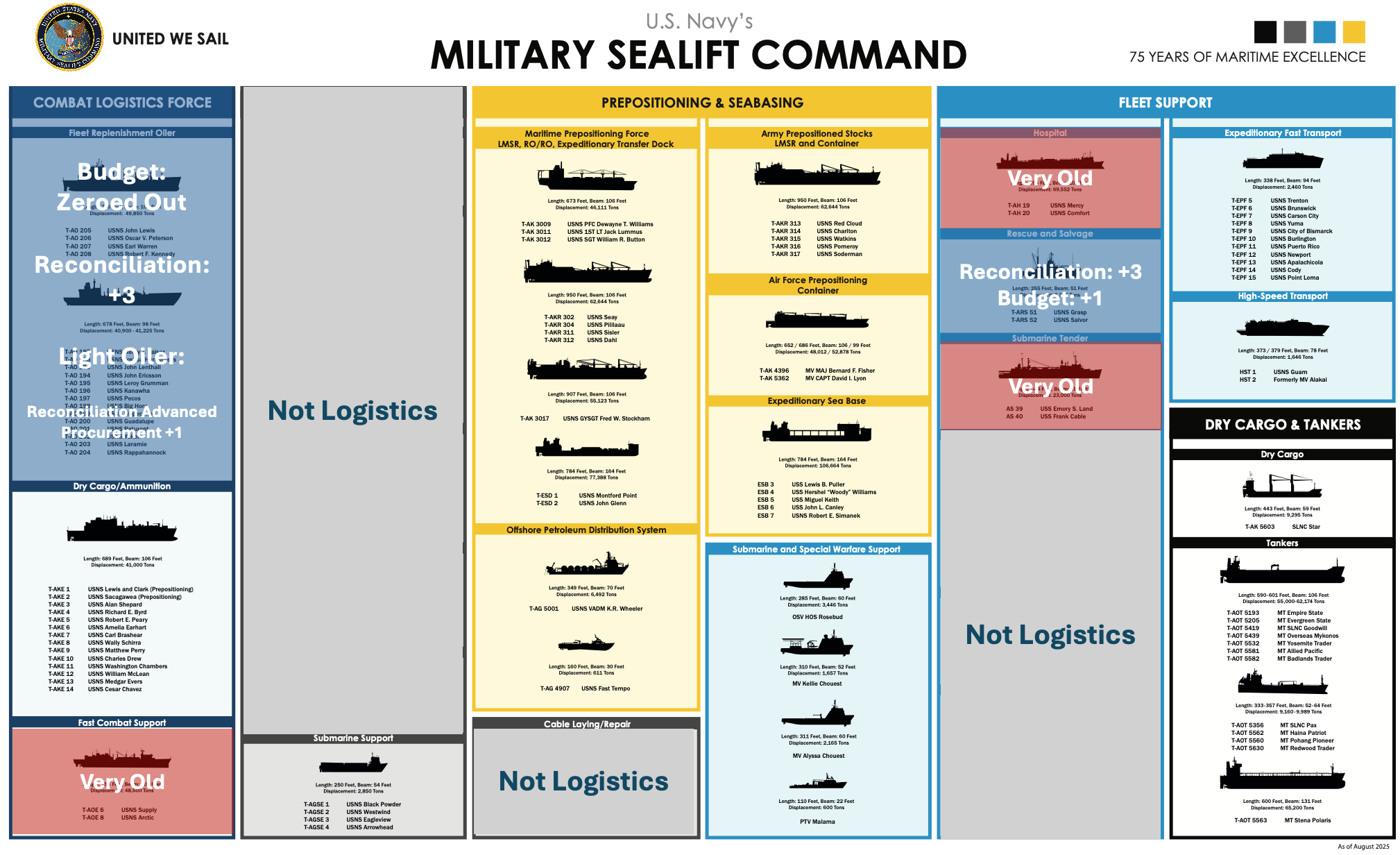
Another way to look back at the gaps and solutions is through the Military Sealift Command’s Fleet. Major investments in oilers and auxiliaries address some of the oldest key ship programs, but current budgets still leave multiple parts of the fleet rusting. And almost every ship in this fleet is exquisite, and vulnerable against PLA missiles.
Conclusion
There is much work to be done. I know of activity in the space - great Americans building important capability - that I can’t report here. But even if all their work comes to fruition, the core problems do not dissipate.
Logistics is already contested. Like our narrative dominance, our cultural power, our alliances, and even the power of our currency - it will only become more contested as we progress into this century. Last year saw asymmetric threats - poorly armed Houthis and Ukrainians - shutter major sea lanes in the Red and Black Seas, despite facing professional, well-armed navies. Brittle sustainment centers of gravity could hamstring the lethal fleet our Sailors and shipyards have built with decades of sweat and grit.
This series will continue with an air edition, and a ground & infrastructure edition. Please offer feedback and discussion where I missed or mis-portrayed elements of the force. If you’re building to solve a gap I highlighted, shoot me a note. But for now, we have a fleet to rebuild.
US-Flagged Fleet is slightly broader than the Jones Act Fleet
Yeah the JLOTS thing is a bit grim especially if you see the bridging barges China is making: https://lukechen.substack.com/p/abundance-for-defense-a-tale-of-two
You’ve convinced me contested naval logistics prob needs more of a look than air basing logistics
Great Analysis!